
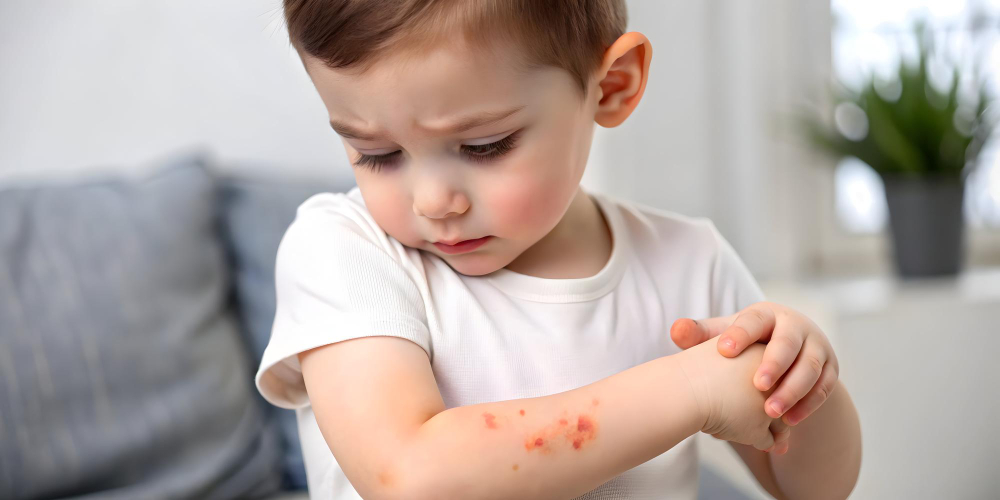
What Is Eczema in Children?
Eczema in children is a common skin condition. It causes dry, itchy, and red skin. Many parents notice it in babies or young kids. Often, eczema appears on the face, arms, or legs. However, it can show up anywhere on the body. The medical name for eczema is atopic dermatitis. Although it is not contagious, it can be uncomfortable for children. Early care can help manage symptoms and prevent flare-ups.
Common Symptoms and Signs
Children with eczema may show different symptoms. Still, some signs are very common. Recognizing these early can help parents seek care quickly. For example, you may notice:
Sometimes, children may also have skin infections. If you see yellow crusts or pus, contact your doctor.
Causes and Risk Factors
Doctors do not know the exact cause of eczema in children. Still, several factors can increase the risk. For instance, children with a family history of eczema, asthma, or allergies are more likely to develop it. Also, the skin’s barrier may not work well, letting moisture out and irritants in. Other triggers include:
Because triggers vary, keeping a diary may help you spot what makes your child’s eczema worse.
How Is Eczema Diagnosed?
Usually, doctors diagnose eczema in children by looking at the skin. They may ask about symptoms, family history, and possible triggers. In most cases, no special tests are needed. However, sometimes a doctor may do allergy tests or skin swabs to rule out other problems. If your child’s rash does not improve, see a pediatrician for further advice.
Treatment Options for Pediatric Eczema
Treating eczema in children focuses on easing symptoms and preventing flare-ups. Your doctor may suggest:
At home, gentle care is important. For example, keep your child’s nails short to prevent scratching. Also, dress them in soft, loose clothing. Always follow your doctor’s instructions for any medicines.
Lifestyle and Skincare Tips for Children with Eczema
Simple daily habits can help manage eczema in kids. For instance:
Because stress can make eczema worse, help your child relax with calming activities.
Prevention Strategies
Although you cannot always prevent eczema in children, some steps may lower the risk of flare-ups. For example:
In dry or cold areas, use a humidifier to add moisture to the air.
When to Consult a Pediatrician
Sometimes, eczema in children needs medical care. You should contact your child’s doctor if:
Early treatment can prevent problems and help your child feel better.
Conclusion
Eczema in children can be managed with the right care. Because every child is different, it is important to find what works best for your family. For personalized advice on managing eczema in your child, consult a pediatrician.